INTRODUCTION
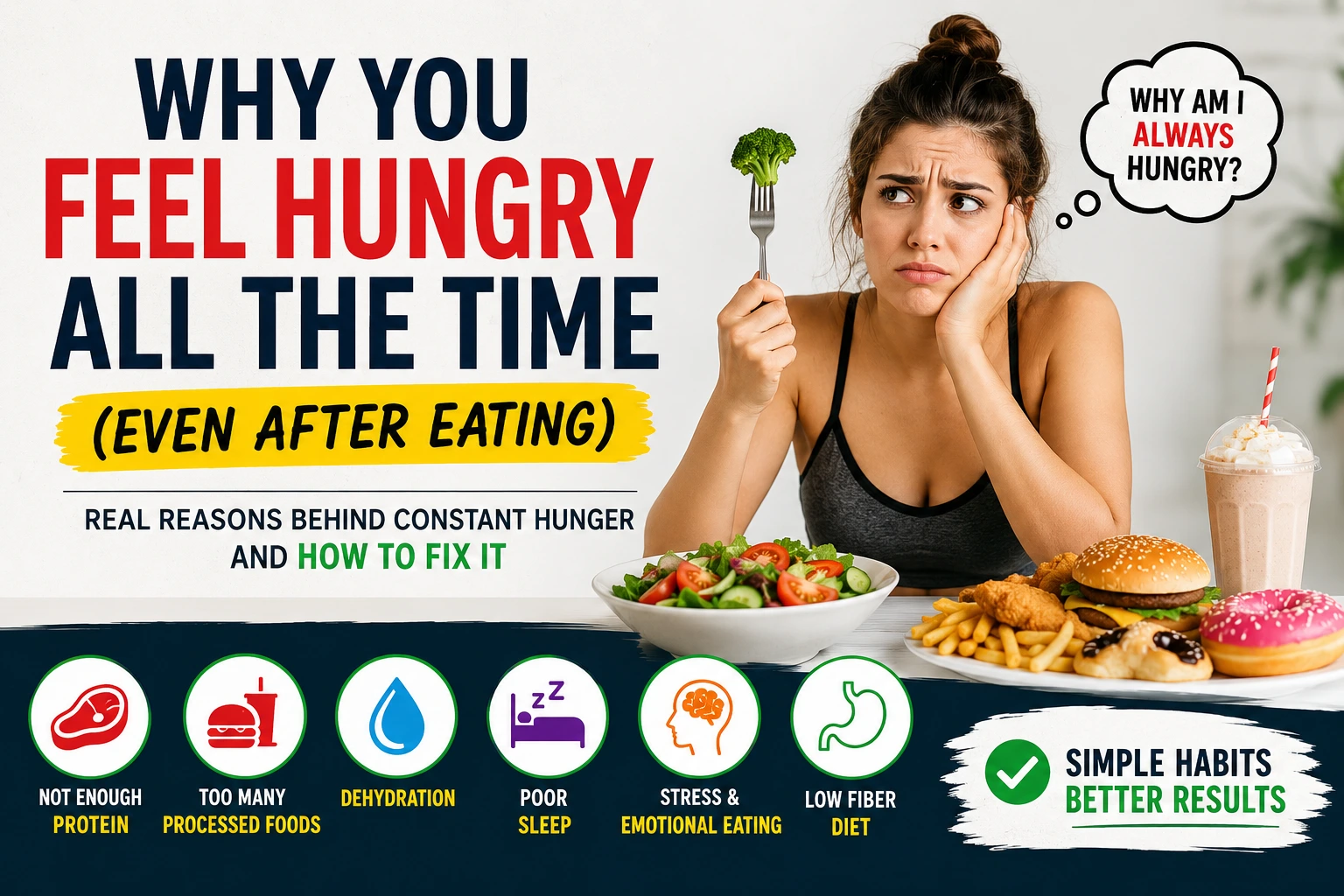
Have you ever eaten a full meal and still felt hungry an hour later? You’re not alone. Many people struggle with constant hunger even when they think they’re eating enough. The problem is not always about willpower — sometimes your body, habits, and lifestyle are working against you.
If you constantly feel hungry, there’s usually a reason behind it. Understanding those reasons can help you control cravings, improve your energy, and make fat loss much easier.
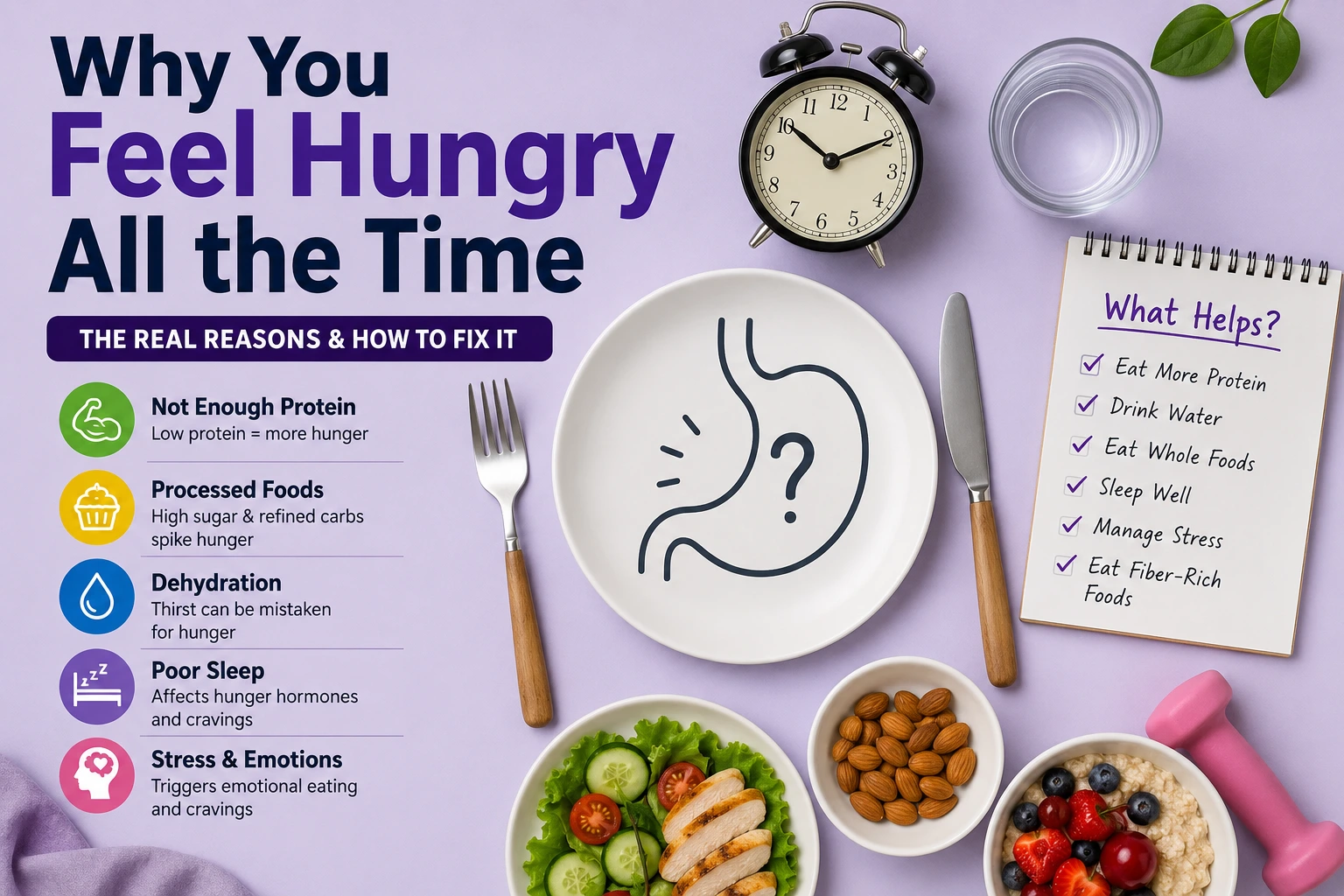
1. You’re Not Eating Enough Protein
Protein is one of the most important nutrients for controlling hunger. It helps you stay full longer and reduces cravings throughout the day.
If your meals mostly contain refined carbs like white bread, sugary cereal, noodles, or snacks, you may feel hungry again very quickly.
Foods High in Protein
- Eggs
- Chicken
- Fish
- Greek yogurt
- Cottage cheese
- Beans and lentils
- Tofu
- Protein smoothies
Adding protein to every meal can make a huge difference in appetite control.
2. You’re Eating Too Many Processed Foods
Highly processed foods are designed to taste good, but they often fail to keep you full.
Foods like chips, candy, sugary drinks, pastries, and fast food digest quickly and can spike your blood sugar. After the spike comes a crash — and that crash often makes you feel hungry again.
Better Alternatives
Instead of ultra-processed snacks, try:
- Fruits
- Nuts
- Oats
- Whole grains
- Yogurt
- Homemade meals
Whole foods usually contain more fiber and nutrients that help control hunger naturally.
3. You’re Not Drinking Enough Water
Sometimes your body mistakes thirst for hunger.
Mild dehydration can make you feel tired, weak, and hungry even when you don’t actually need food.
Quick Tip
Before grabbing a snack, drink a large glass of water and wait 10–15 minutes. You may realize you were just dehydrated.
Staying hydrated also supports digestion and energy levels.
4. Poor Sleep Can Increase Hunger
Sleep affects the hormones that control appetite.
When you don’t get enough sleep, your body produces more ghrelin (the hunger hormone) and less leptin (the hormone that helps you feel full).
That’s why people often crave junk food after a bad night of sleep.
How Much Sleep Do You Need?
Most adults need around:
- 7–9 hours of quality sleep each night
Improving your sleep can reduce cravings and make healthy eating easier.
5. Stress and Emotional Eating
Stress can make your brain crave comfort foods, especially foods high in sugar and fat.
Many people eat not because they are physically hungry, but because they are:
- Bored
- Stressed
- Lonely
- Anxious
- Emotional
This is called emotional eating.
Ways to Manage Stress Without Food
- Walking
- Exercise
- Meditation
- Listening to music
- Talking to someone
- Journaling
Learning the difference between emotional hunger and real hunger is important for long-term health.
6. You’re Eating Too Fast
Your brain needs time to realize that your stomach is full.
If you eat very quickly, you may consume too much food before your body sends the “I’m full” signal.
Try This
- Eat slowly
- Chew properly
- Avoid distractions like phones or TV during meals
People who eat slower often feel more satisfied with less food.
7. Your Diet Lacks Fiber
Fiber slows digestion and helps you stay full longer.
Low-fiber diets can leave you hungry shortly after eating.
High-Fiber Foods
- Vegetables
- Fruits
- Oats
- Brown rice
- Beans
- Chia seeds
- Whole grains
Adding more fiber to your meals can improve digestion and reduce unnecessary snacking.
8. You May Be Restricting Calories Too Much
Extreme dieting can backfire.
If you eat too little for too long, your body responds by increasing hunger signals to protect itself.
This often leads to:
- Strong cravings
- Binge eating
- Low energy
- Mood swings
Healthy weight loss should be gradual and sustainable, not extreme.
9. Certain Medical Conditions Can Affect Hunger
Sometimes constant hunger may be linked to health conditions such as:
- Diabetes
- Thyroid problems
- Hormonal imbalances
Certain medications can also increase appetite.
If your hunger feels extreme or unusual, it may be a good idea to speak with a healthcare professional.
How to Feel Full Longer Naturally
Here are simple habits that can help control hunger naturally:
Eat More:
- Protein
- Fiber
- Whole foods
- Healthy fats
Avoid:
- Sugary drinks
- Ultra-processed snacks
- Extreme dieting
Lifestyle Habits:
- Sleep properly
- Drink enough water
- Exercise regularly
- Manage stress
Small changes can make a big difference over time.
Final Thoughts
Feeling hungry all the time doesn’t always mean you lack willpower. In many cases, your daily habits, food choices, sleep, and stress levels are affecting your appetite more than you realize.
Instead of trying extreme diets, focus on building balanced meals and healthier routines that actually keep you satisfied.
When you understand what your body truly needs, managing hunger becomes much easier.
Checkout Meal Prep Container - https://amzn.to/4txQc13
👉 Ready to Level Up? Check Out My Store - https://payhip.com/b/EroYO
💪 Get My Best Fitness Products Here - https://payhip.com/b/EroYO