1. INTRODUCTION
If you're trying to lose weight, you've probably asked yourself this question:
Should I walk or run for better fat loss?
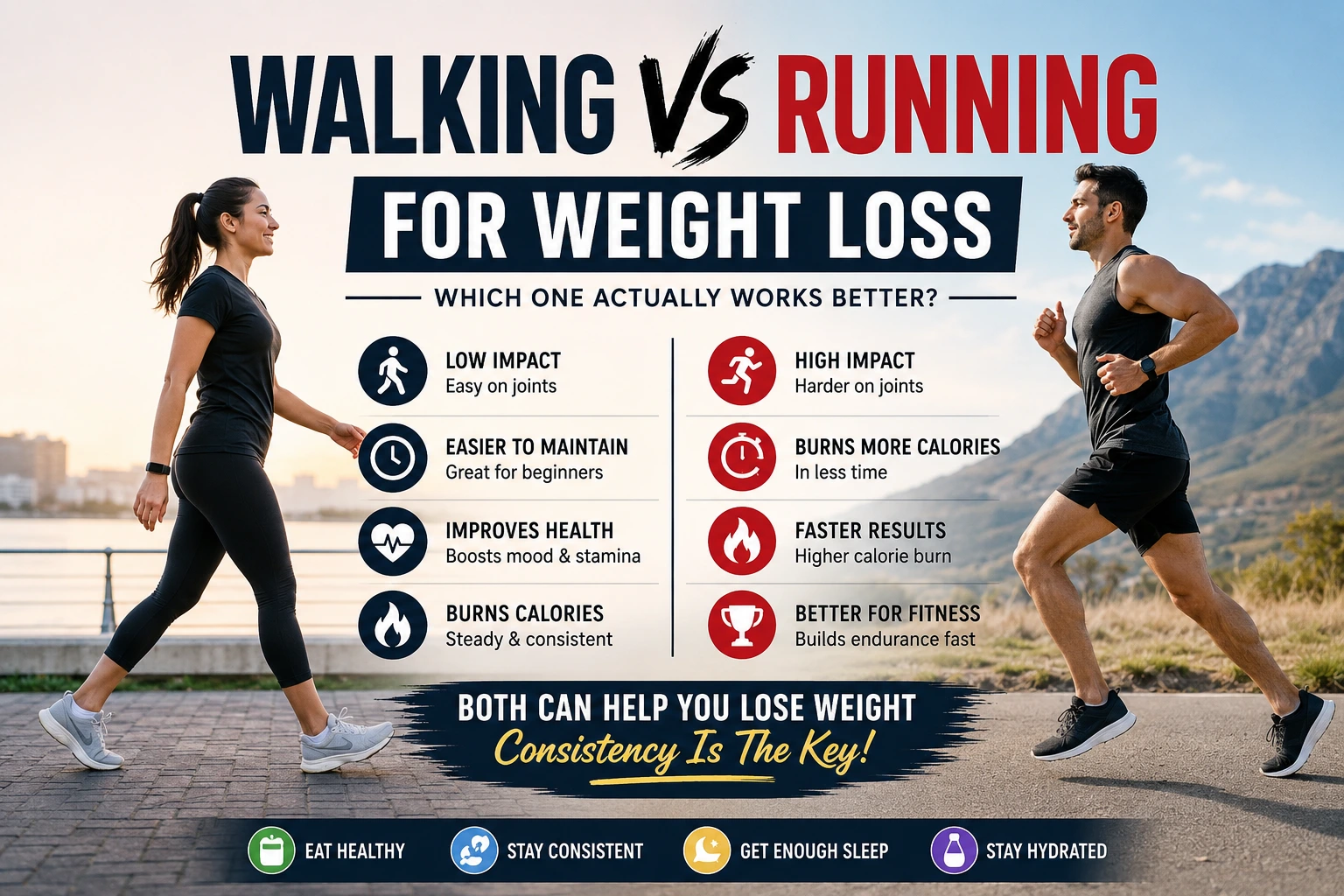
Some people say running burns more calories. Others claim walking is easier to maintain and better for long-term results. The truth is — both can help with weight loss, but the best option depends on your body, fitness level, and lifestyle.
In this blog, we'll break down the real difference between walking and running for weight loss, including calorie burn, fat loss, beginner-friendliness, and which one is easier to stick with.
2. Does Walking Help You Lose Weight?
Yes — absolutely.
Walking is one of the most underrated forms of exercise for fat loss. It may not look intense, but consistent walking can help you burn calories, improve metabolism, and reduce body fat over time.
The biggest advantage of walking is that almost anyone can do it.
You don’t need:
- A gym membership
- Expensive equipment
- Athletic experience
Even a simple 30–45 minute daily walk can make a noticeable difference when combined with a healthy diet.
3. Does Running Burn More Calories?
Yes, running burns more calories in less time.
For example:
- A person walking for 30 minutes may burn around 120–180 calories
- The same person running may burn 250–450 calories
Running increases heart rate faster and requires more energy from your body.
That’s why many people choose running when they want faster results.
But there’s an important catch…
4. Running Isn’t Always Better for Beginners
Many beginners start running too aggressively and quit after a few days because of:
- Knee pain
- Exhaustion
- Lack of consistency
- Muscle soreness
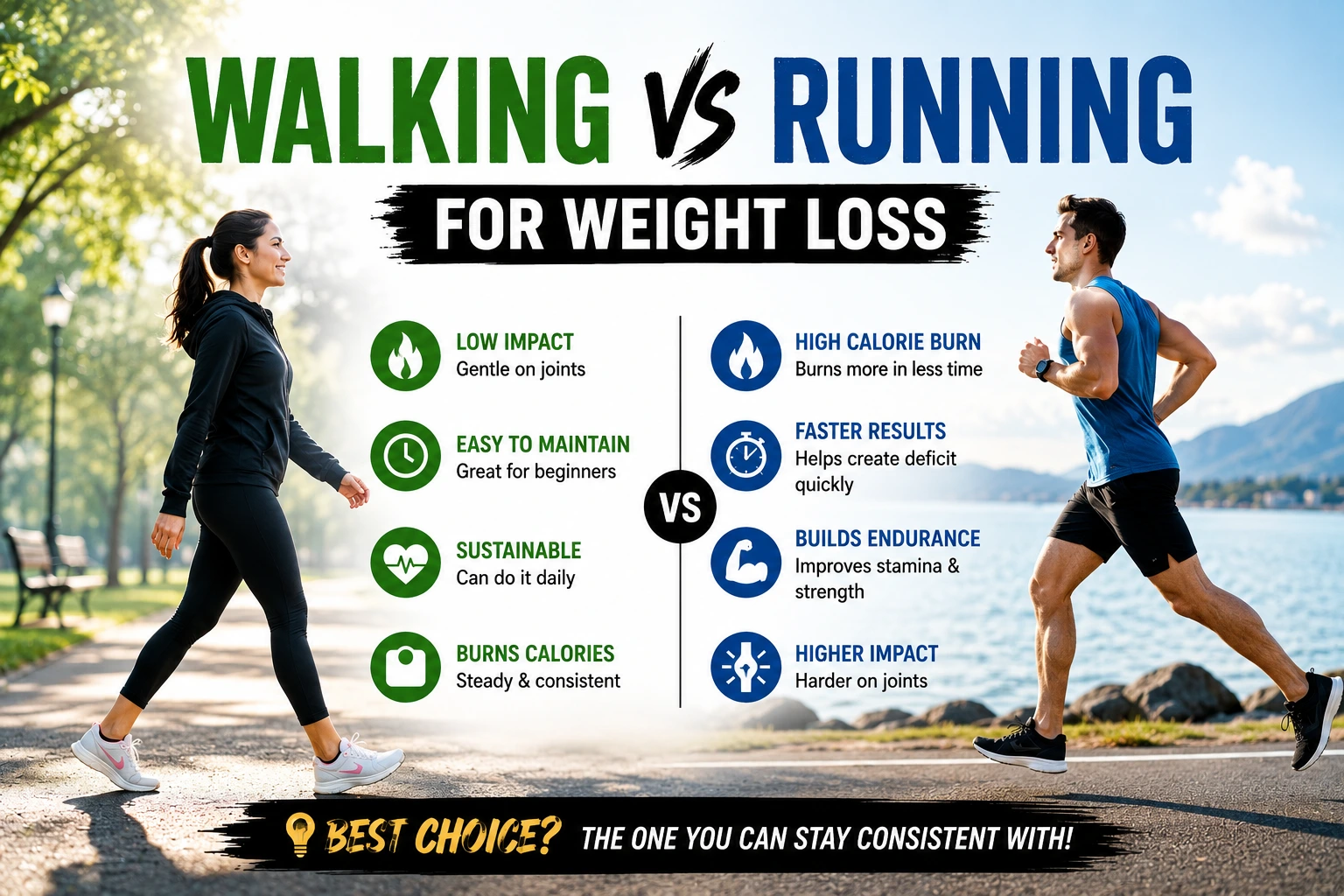
Walking is much easier to maintain consistently.
And consistency is what actually creates long-term fat loss.
A moderate workout done regularly is far more effective than an intense workout you stop doing after one week.
5. Walking vs Running: Which Burns More Fat?
This is where people get confused.
Running burns more total calories.
But walking can still be extremely effective for burning body fat — especially when done consistently over weeks and months.
Walking also:
- Puts less stress on joints
- Reduces injury risk
- Helps recovery
- Feels mentally easier
For overweight beginners, walking is often the smarter starting point.
6. Which Is Better for Belly Fat?
Neither walking nor running can specifically target belly fat.
Your body loses fat overall, not from one specific area.
However:
- Running may help create a larger calorie deficit faster
- Walking helps maintain daily activity without burnout
The best results usually come from:
- Consistent movement
- Healthy eating
- Good sleep
- Patience
7. The Best Option for Beginners
If you're completely new to fitness, start with walking.
Why?
Because the best workout is the one you can continue doing consistently.
A realistic beginner routine could look like:
- 30 minutes walking daily
- 8,000–10,000 steps per day
- Gradually increasing pace over time
Once your stamina improves, you can add light jogging or running intervals.
8. Walking + Running Together = Powerful Combination
You don’t actually have to choose only one.
Many people get excellent results by combining both:
- Walking on recovery days
- Running 2–3 times per week
- Staying active daily
This approach is easier on the body and more sustainable long term.
9. Which One Should You Choose?
Choose walking if:
- You're a beginner
- You’re overweight
- You have joint pain
- You want a sustainable routine
Choose running if:
- You already have decent fitness
- You enjoy intense workouts
- You want faster calorie burn
The most important thing is consistency — not perfection.
Final Thoughts
Walking and running can both help with weight loss.
Running burns more calories faster, but walking is easier to maintain and safer for most beginners.
If you struggle to stay consistent with workouts, don’t underestimate the power of daily walking.
Small habits repeated every day create the biggest transformation over time.