INTRODUCTION

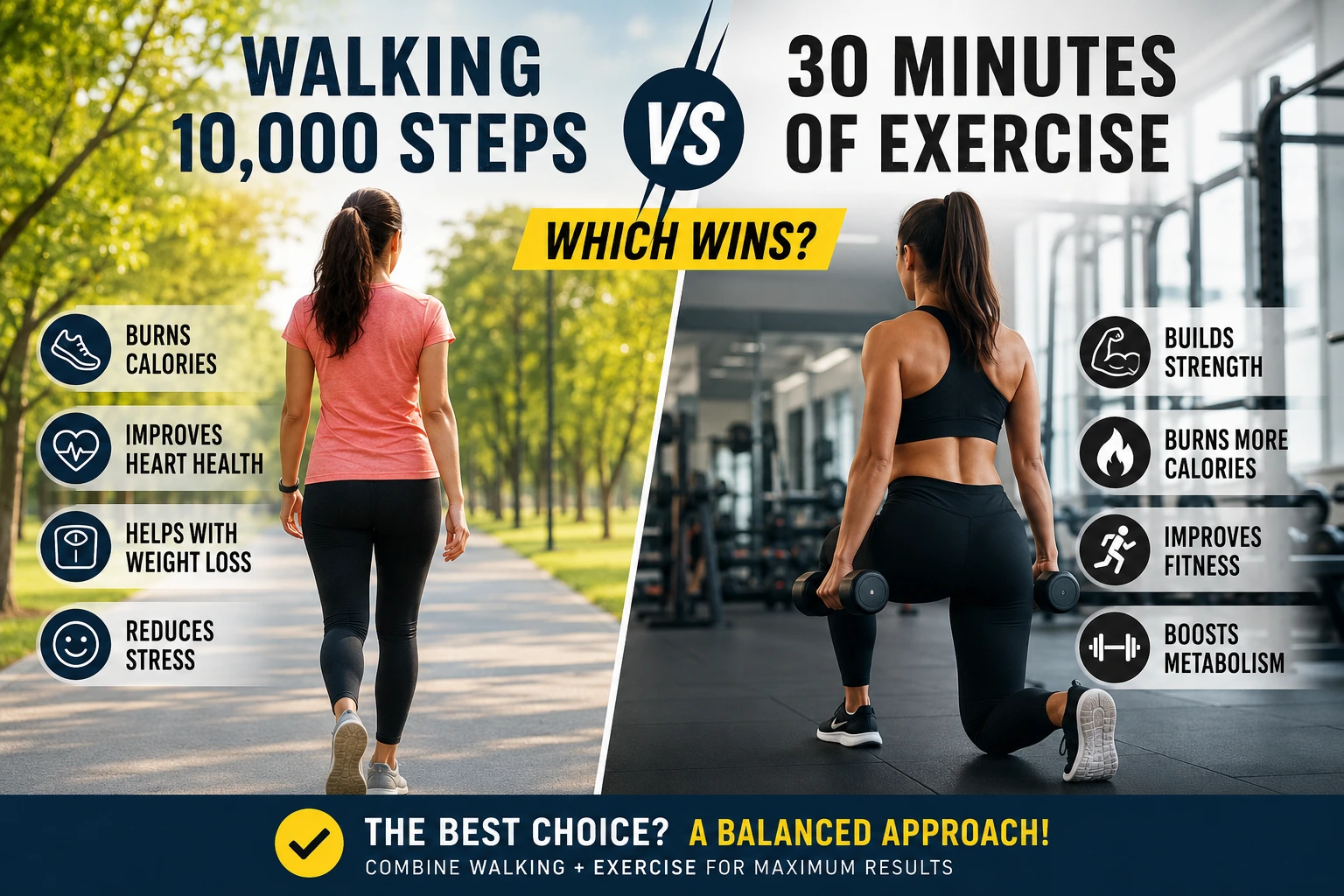
Can hitting 10,000 steps every day replace a 30-minute workout? Or is one clearly better than the other? The answer isn't as simple as you might think.
With fitness trackers becoming more popular than ever, many people aim to reach the famous 10,000-step goal. At the same time, health organizations continue to recommend at least 30 minutes of moderate exercise most days of the week.
So which one delivers better results for weight loss, heart health, muscle fitness, and overall wellness? Let's break down the science and help you decide which approach fits your lifestyle.
Where Did the 10,000-Step Goal Come From?
Many people assume that walking 10,000 steps is based on medical research. Surprisingly, it started as a marketing campaign in Japan during the 1960s for a pedometer called "Manpo-kei," which translates to "10,000-step meter."
Since then, researchers have found that walking more each day is linked to better health, but there isn't anything magical about the number 10,000. In fact, many health benefits begin well before you reach that milestone.
What Counts as 30 Minutes of Exercise?
Thirty minutes of exercise usually refers to moderate-to-vigorous physical activity, such as:
Brisk walking
Jogging
Cycling
Swimming
Strength training
Dancing
HIIT workouts
Rowing
The key difference is intensity. Exercise intentionally raises your heart rate and challenges your muscles more than casual daily movement.
Calories Burned: Which One Wins?
The number of calories you burn depends on your:
Body weight
Age
Walking speed
Exercise intensity
Fitness level
Here's a general comparison for someone weighing around 70 kg (154 lbs):
| Activity | Estimated Calories Burned |
|---|---|
| Walking 10,000 Steps | 300–500 calories |
| 30 Minutes Brisk Walking | 140–200 calories |
| 30 Minutes Running | 300–450 calories |
| 30 Minutes Strength Training | 180–300 calories |
| 30 Minutes HIIT | 250–450 calories |
Winner: It depends.
If your 30-minute workout is intense, it may burn as many—or more—calories than walking 10,000 steps in much less time. However, if your workout is light, walking all day could burn more overall.
Which Is Better for Weight Loss?
Weight loss depends on creating a calorie deficit over time.
Walking 10,000 steps helps by:
Increasing daily calorie burn
Being easy to maintain
Reducing sedentary time
Improving consistency
Thirty minutes of structured exercise helps by:
Burning calories more efficiently
Preserving muscle during weight loss
Improving metabolism through muscle development
Increasing post-exercise calorie burn after higher-intensity workouts
Best choice: Combine both whenever possible.
Heart Health Comparison
Both walking and exercise improve cardiovascular health.
Walking regularly can:
Lower blood pressure
Improve circulation
Reduce cholesterol
Decrease the risk of heart disease
More vigorous exercise may provide additional benefits, including:
Improved aerobic capacity
Better endurance
Stronger heart function
Greater improvements in blood sugar control
For heart health, consistency matters more than choosing one over the other.
Muscle Strength: Exercise Takes the Lead
Walking primarily works your:
Calves
Hamstrings
Glutes
Hip muscles
However, it doesn't provide enough resistance to build significant muscle.
Strength training, on the other hand:
Builds muscle mass
Increases bone density
Improves balance
Supports healthy aging
Boosts resting metabolism
If your goal is building strength or changing body composition, a dedicated workout is the better option.
Which Is Easier to Stick With?
One of the biggest predictors of success is consistency.
Walking is:
Free
Beginner-friendly
Low impact
Easy on the joints
Suitable for almost all ages
Structured exercise can be more challenging because it often requires:
Planning
Equipment or a gym
Recovery time
Higher motivation
If you enjoy walking and can do it daily, you're more likely to stay active long-term.
Time Commitment
Walking 10,000 steps typically takes:
70–100 minutes depending on pace
A structured workout usually lasts:
Around 30 minutes
If you're short on time, a focused workout is generally more efficient.
Mental Health Benefits
Both options can reduce stress and improve mood.
Walking outdoors offers additional benefits such as:
Fresh air
Sunlight exposure
Time away from screens
Improved mental clarity
Exercise can also:
Release endorphins
Improve confidence
Reduce symptoms of anxiety
Enhance sleep quality
There is no clear winner here—both support mental well-being.
Can Walking Replace Exercise?
For many people, walking alone can significantly improve health, especially if they're currently inactive.
However, walking doesn't fully replace:
Strength training
Flexibility work
High-intensity cardiovascular exercise
Experts generally recommend including all of these throughout the week for balanced fitness.
The Ideal Weekly Plan
Rather than choosing one over the other, combine them:
Walk 7,000–10,000 steps most days.
Complete at least 150 minutes of moderate exercise each week.
Include strength training at least two days per week.
Stretch regularly to maintain flexibility and mobility.
This balanced approach supports weight management, heart health, muscle strength, and long-term wellness.
Final Verdict: Which Wins?
The answer depends on your goals.
Choose 10,000 steps if you want to:
Increase daily activity
Improve general health
Lose weight gradually
Build a sustainable habit
Choose 30 minutes of exercise if you want to:
Build muscle
Improve fitness faster
Burn calories efficiently
Increase strength and endurance
The biggest winner isn't one or the other—it's staying active consistently. Walking more and exercising regularly complement each other, helping you create a healthier lifestyle that lasts.
Frequently Asked Questions (FAQs)
Is walking 10,000 steps enough exercise?
For many healthy adults, it provides substantial physical activity, but adding strength training and moderate-to-vigorous exercise creates a more balanced fitness routine.
Can I lose weight by walking 10,000 steps every day?
Yes. Combined with a calorie-controlled diet, walking 10,000 steps daily can support weight loss by increasing your daily energy expenditure.
Is a 30-minute workout better than walking?
If the workout is moderate or vigorous, it is generally more time-efficient for improving fitness. Walking, however, is easier to maintain and offers excellent health benefits.
How many steps equal 30 minutes of walking?
A brisk 30-minute walk typically covers around 3,000–4,000 steps, depending on your pace and stride length.
Should I do both?
Yes. Walking throughout the day and adding structured exercise a few times per week is one of the most effective ways to improve overall health and fitness.