INTRODUCTION
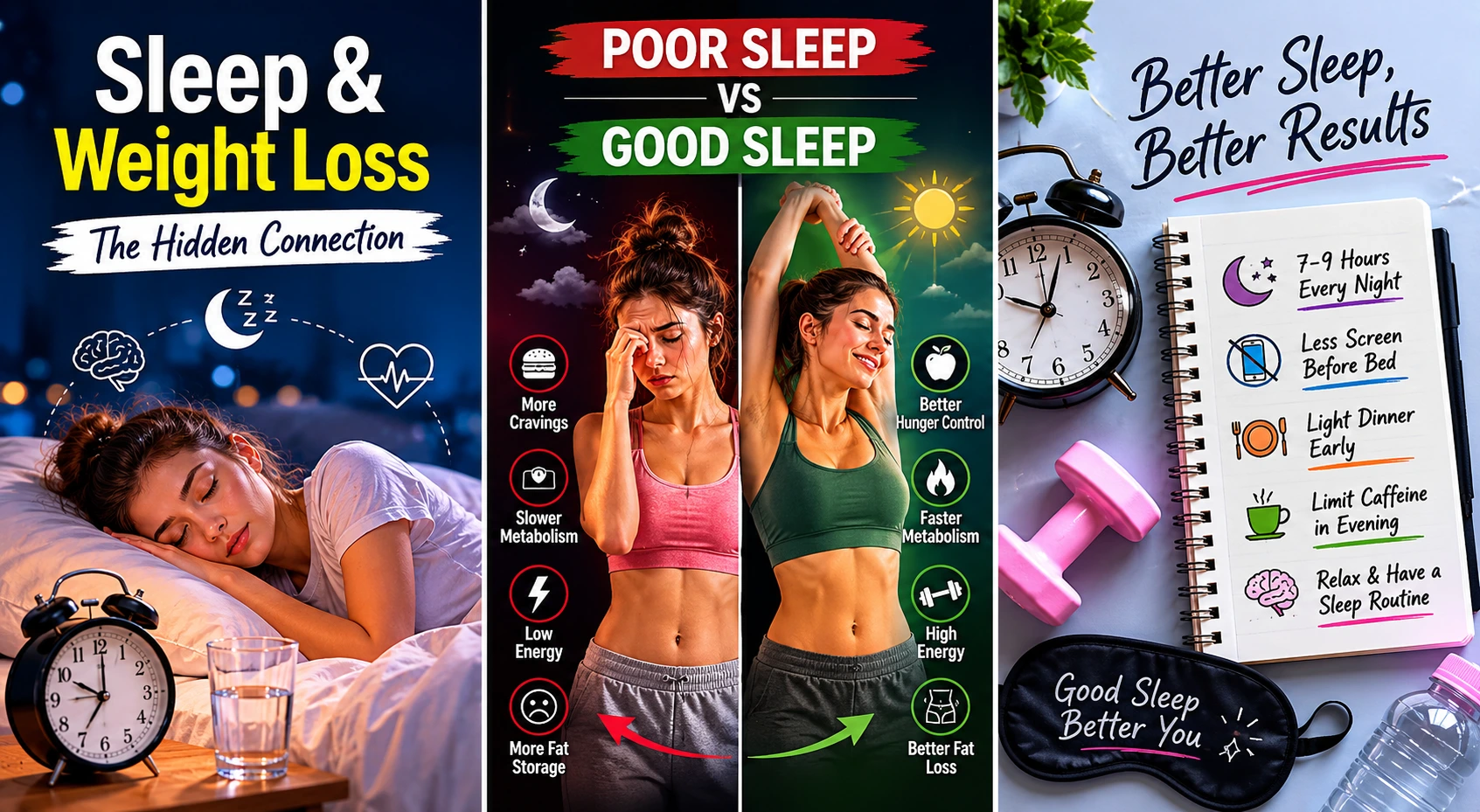
Most people focus only on diet and exercise when trying to lose weight. They count calories, do cardio, and follow strict meal plans — but ignore one major factor: sleep.
Poor sleep can quietly slow fat loss, increase cravings, lower energy, and make healthy habits harder to maintain. Even if your workouts and diet are good, not getting enough sleep can make weight loss feel frustratingly slow.
Why Sleep Matters for Weight Loss
Your body does most of its recovery work while you sleep. This includes hormone balance, muscle repair, metabolism regulation, and appetite control.
When sleep quality drops, your body starts working against your fat loss goals.
People who regularly sleep less than 6–7 hours often experience:
- Increased hunger
- More cravings for sugar and junk food
- Lower energy for workouts
- Slower recovery
- Higher stress levels
- Increased fat storage
Sleep is not just “rest.” It directly affects how your body burns and stores energy.
The Connection Between Sleep and Hunger
Two major hormones control hunger:
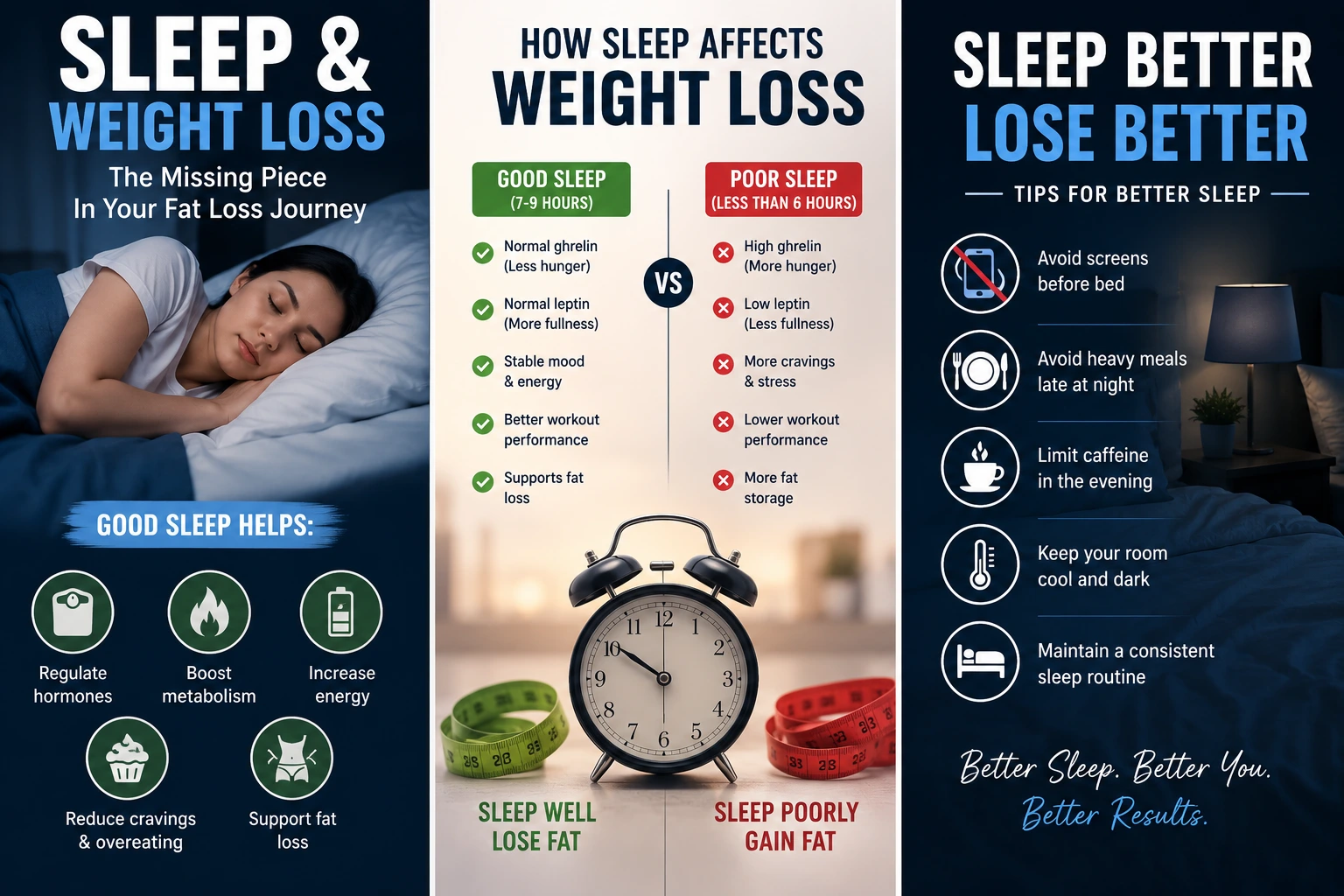
- Ghrelin → increases hunger
- Leptin → signals fullness
Lack of sleep increases ghrelin and lowers leptin. That means you feel hungrier and less satisfied after eating.
This is why after a poor night’s sleep, many people crave:
- Fast food
- Sugary snacks
- Soda
- High-calorie comfort foods
Your body looks for quick energy because it’s tired.
Poor Sleep Can Slow Fat Loss
When you’re sleep-deprived, your body produces more cortisol, also known as the stress hormone.
High cortisol levels may:
- Increase belly fat storage
- Cause water retention
- Increase cravings
- Make weight loss harder
Sleep deprivation can also reduce workout performance. You may feel weaker, less motivated, and more likely to skip exercise entirely.
Can You Lose Weight Without Enough Sleep?
Technically yes — but it becomes much harder.
You may still lose some weight through calorie deficit, but poor sleep often leads to:
- Increased overeating
- Less consistency
- More fatigue
- Slower progress over time
Many people think their diet is the problem when sleep is actually the missing piece.
How Much Sleep Is Best for Fat Loss?
Most adults should aim for:
- 7–9 hours of sleep per night
Consistency matters more than sleeping long hours occasionally.
Going to bed and waking up at similar times daily helps improve recovery and energy levels.
Tips to Improve Sleep Naturally
1. Reduce Screen Time Before Bed
Phones and bright screens can disrupt melatonin production, making it harder to fall asleep.
Try avoiding screens 30–60 minutes before bed.
2. Avoid Heavy Meals Late at Night
Eating large meals right before sleep may affect digestion and sleep quality.
3. Limit Caffeine in the Evening
Coffee, energy drinks, and pre-workouts can stay in your system for hours.
4. Keep Your Room Cool and Dark
A comfortable sleeping environment can improve sleep quality significantly.
5. Create a Consistent Sleep Routine
Going to bed at random times every night can affect recovery and hormone balance.
Sleep vs Exercise: Which Is More Important?
Exercise is essential, but sleep supports everything else.
Without proper sleep:
- Recovery suffers
- Hunger increases
- Energy drops
- Consistency becomes difficult
Think of sleep as the foundation that helps diet and workouts actually work.
Final Thoughts
If your weight loss progress feels slow, don’t only look at calories and workouts. Your sleep habits may be holding you back more than you realize.
Better sleep can improve:
- Hunger control
- Recovery
- Energy
- Workout performance
- Fat loss consistency
Sometimes the simplest changes create the biggest results
Checkout Meal Prep Container - https://amzn.to/4txQc13
👉 Ready to Level Up? Check Out My Store - https://payhip.com/b/EroYO
💪 Get My Best Fitness Products Here - https://payhip.com/b/EroYO