INTRODUCTION
Protein desserts have exploded in popularity over the past few years. Walk through any supermarket or browse social media, and you'll find protein cookies, protein brownies, protein ice cream, protein pudding, and even protein candy.
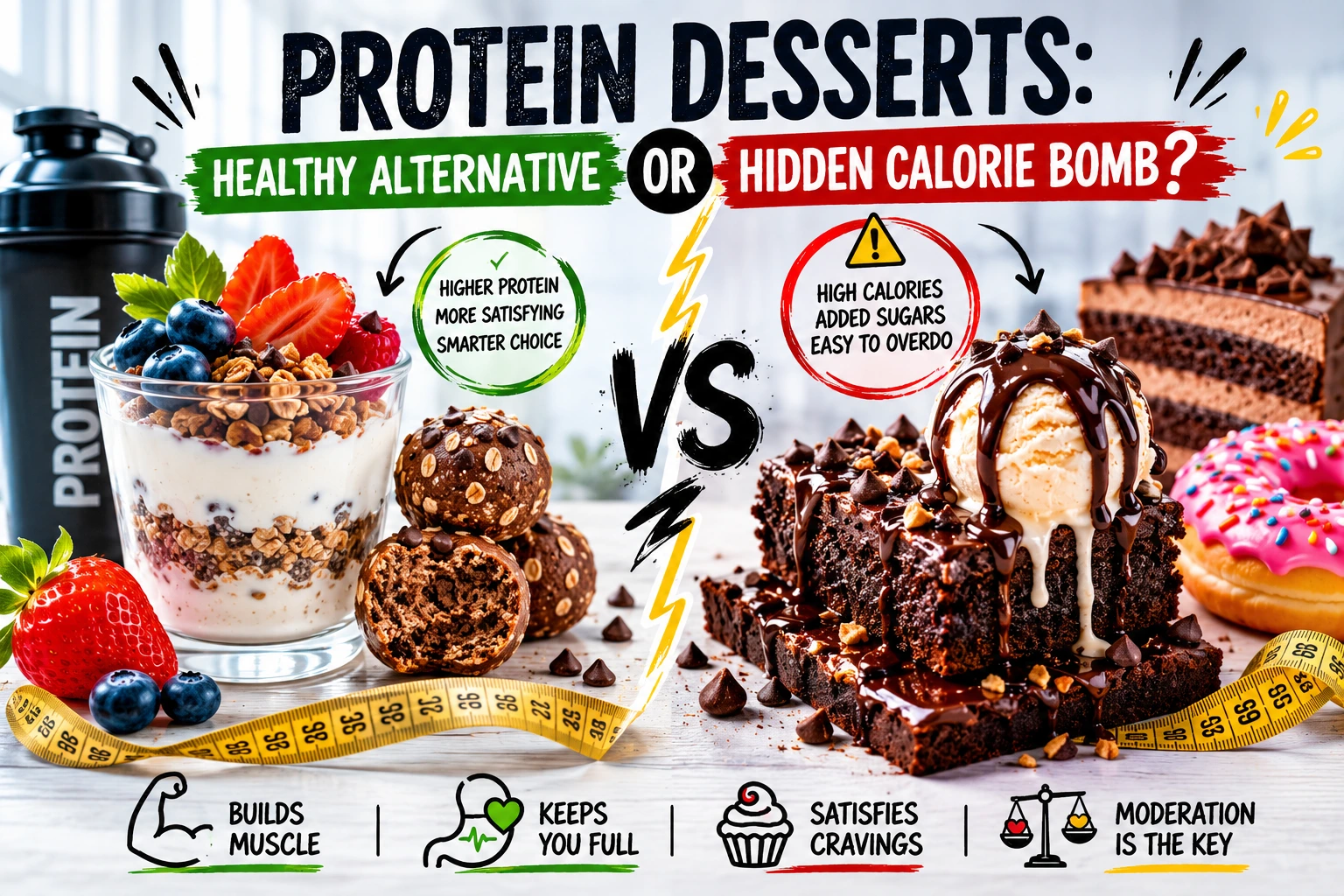
Fitness influencers often promote these treats as guilt-free alternatives to traditional desserts. But are protein desserts truly a healthy choice, or are they simply regular desserts with clever marketing?
The answer depends on what's inside them.
What Are Protein Desserts?
Protein desserts are sweet foods that contain more protein than traditional desserts. Manufacturers typically increase protein content by adding ingredients such as:
- Whey protein
- Casein protein
- Milk protein concentrate
- Egg protein
- Pea protein
- Soy protein
The goal is to provide a dessert-like experience while helping people meet their daily protein requirements.
Popular examples include:
- Protein bars
- Protein brownies
- Protein cookies
- Protein ice cream
- Protein pudding
- Protein mug cakes
- High-protein yogurt desserts
Why Protein Desserts Became So Popular
Several factors have contributed to their popularity:
1. Increased Focus on Protein
Research consistently shows that protein can help support muscle maintenance and increase feelings of fullness. As more people prioritize protein intake, companies have responded by creating high-protein versions of popular foods.
2. Weight Loss Trends
Many consumers view protein desserts as a way to satisfy cravings without completely derailing their diet.
3. Social Media Influence
Fitness influencers frequently showcase protein-based recipes and snacks, creating the impression that these products are always healthier than traditional desserts.
The Potential Benefits of Protein Desserts
They May Help Control Hunger
Protein is generally more filling than refined carbohydrates. A protein-rich dessert may help reduce hunger and make it easier to avoid excessive snacking later.
They Can Support Muscle Recovery
After exercise, protein contributes to muscle repair and recovery. A protein dessert can help increase daily protein intake.
They May Reduce Cravings
For many people, completely eliminating sweets isn't realistic. Protein desserts can provide a middle ground between strict dieting and overindulgence.
Convenient Nutrition
Busy individuals may find protein desserts a convenient way to increase protein consumption throughout the day.
When Protein Desserts Become a Hidden Calorie Bomb
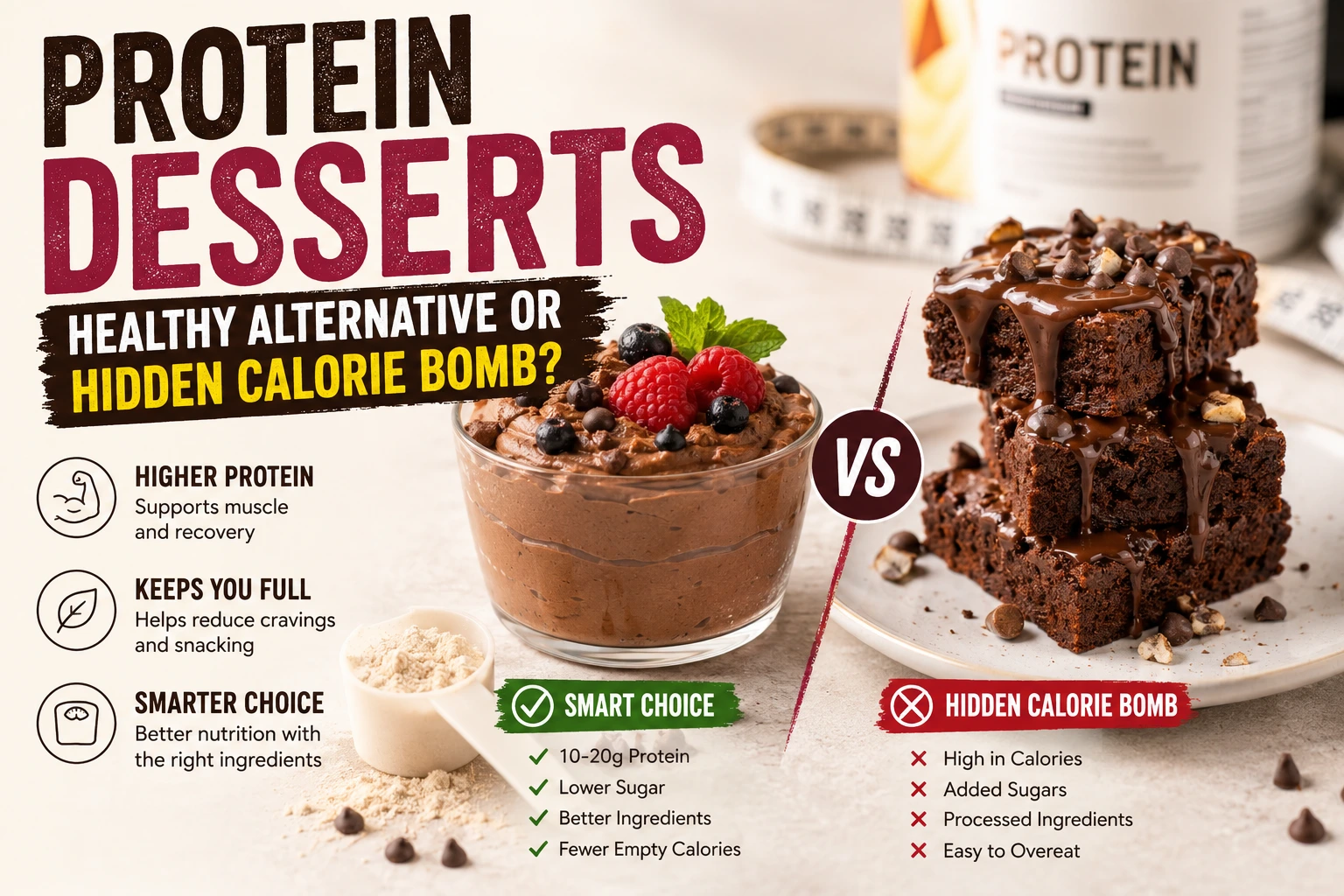
Despite their healthy image, not all protein desserts are diet-friendly.
High Calorie Content
Some protein desserts contain nearly as many calories as traditional desserts.
For example:
- Protein brownie: 250–400 calories
- Protein cookie: 200–450 calories
- Protein bar: 180–350 calories
The added protein doesn't automatically make a product low-calorie.
Added Sugars
Many products still contain significant amounts of sugar.
Some brands add protein while keeping large amounts of:
- Sugar
- Syrups
- Chocolate coatings
- Sweet fillings
This can create a product that's only marginally healthier than a standard dessert.
Large Portion Sizes
Marketing often causes people to underestimate calories.
Someone may think:
"It's a protein dessert, so it's healthy."
This mindset can lead to eating larger portions than intended.
Highly Processed Ingredients
Many protein desserts contain:
- Artificial sweeteners
- Sugar alcohols
- Preservatives
- Flavor enhancers
While these ingredients aren't necessarily harmful for most people, heavily processed foods shouldn't completely replace whole-food protein sources.
How to Choose a Better Protein Dessert
When shopping, check these factors:
Protein Content
Aim for at least 10–15 grams of protein per serving.
Calories
Compare calories with traditional alternatives. Sometimes the difference is surprisingly small.
Sugar
Lower sugar content is generally preferable, especially for people trying to manage calorie intake.
Ingredient List
Shorter ingredient lists are often easier to understand and may indicate less processing.
Portion Size
Always check serving sizes rather than assuming the entire package equals one serving.
Are Homemade Protein Desserts Better?
In many cases, yes.
Homemade options allow you to control:
- Protein content
- Sugar levels
- Calories
- Ingredients
Popular homemade protein desserts include:
- Greek yogurt parfaits
- Protein mug cakes
- Protein pancakes
- Protein brownies
- Frozen protein yogurt bowls
These recipes often provide more nutrition with fewer additives.
Who Should Eat Protein Desserts?
Protein desserts may be useful for:
- Active individuals
- Athletes
- People trying to increase protein intake
- Individuals managing sweet cravings
- Those following a calorie-controlled diet
However, they shouldn't replace:
- Lean meats
- Fish
- Eggs
- Dairy products
- Beans
- Lentils
- Other whole-food protein sources
The Bottom Line
Protein desserts can be a helpful tool for satisfying cravings while increasing protein intake. However, they are not automatically healthy simply because the word "protein" appears on the label.
Some products offer a smart nutritional balance, while others contain nearly as many calories and sugars as traditional desserts.
The key is to look beyond the marketing, check the nutrition label, and remember that calories still count. When chosen wisely, protein desserts can fit into a healthy lifestyle. When consumed mindlessly, they can easily become a hidden calorie bomb.
Frequently Asked Questions
Are protein desserts good for weight loss?
They can be, especially if they help control cravings and fit within your daily calorie goals.
Can protein desserts replace meals?
No. Most protein desserts lack the complete nutritional profile of a balanced meal.
Are protein desserts healthier than regular desserts?
Sometimes. It depends on calories, sugar content, ingredients, and portion size.
How much protein should a protein dessert contain?
A good target is around 10–20 grams of protein per serving.
Can I eat protein desserts every day?
Occasional daily consumption is generally fine if they fit your overall nutrition plan, but whole-food protein sources should remain the foundation of your diet.