INTRODUCTION

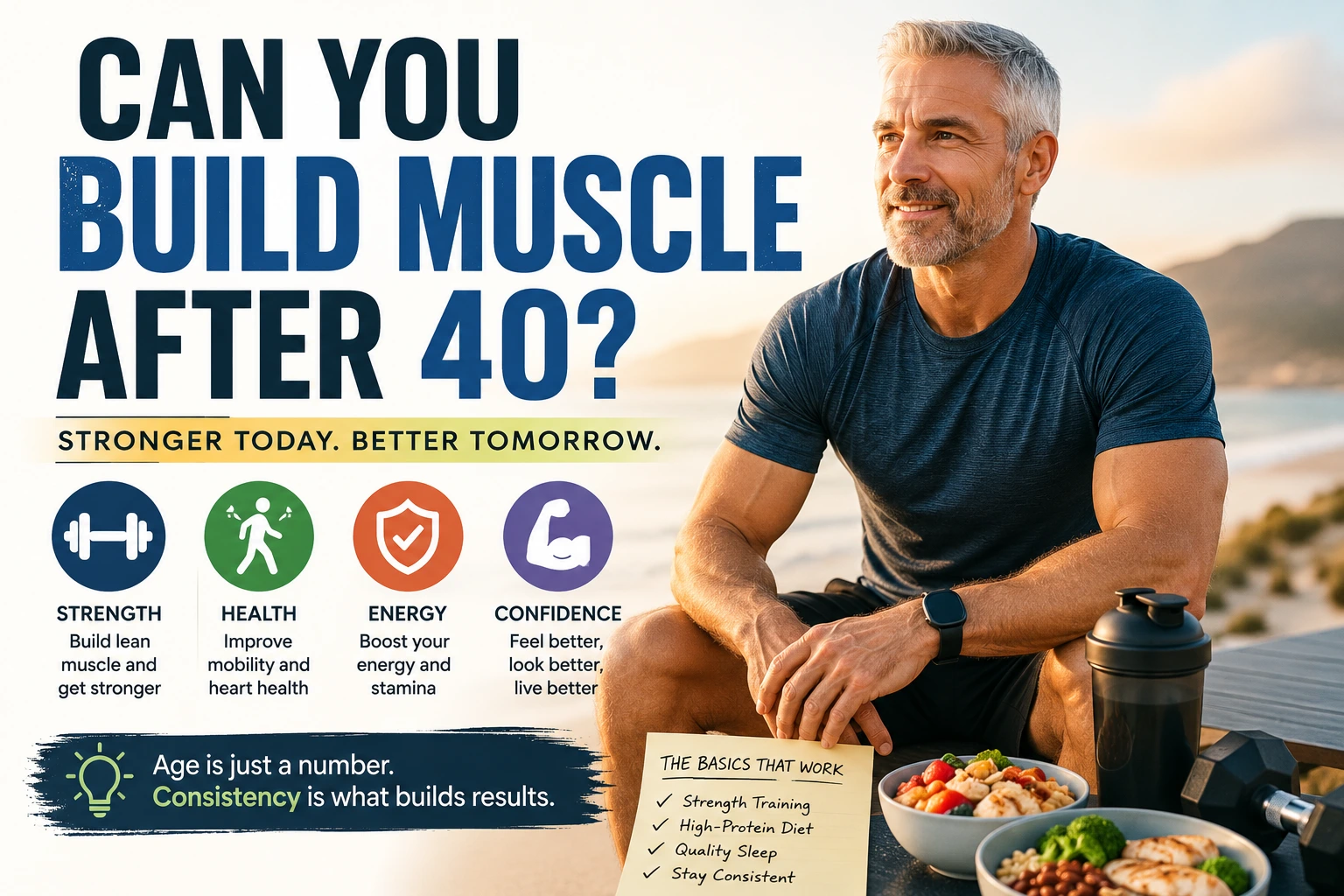
Many people believe that building muscle is only for young adults in their 20s and 30s. Once you hit 40, the common assumption is that muscle growth slows down, strength declines, and getting fit becomes nearly impossible.
The truth is far more encouraging.
You can absolutely build muscle after 40. In fact, thousands of people start their fitness journeys in their 40s, 50s, and even 60s and achieve impressive results. While your body may not respond exactly the same way it did in your younger years, muscle growth remains possible with the right combination of training, nutrition, recovery, and consistency.
If you're over 40 and wondering whether it's too late to get stronger, this guide will show you why age is not the barrier many people think it is.
Why Muscle Matters More After 40
Starting around age 30, adults naturally begin to lose muscle mass. This process gradually accelerates with age and is known as age-related muscle loss.
Losing muscle can lead to:
- Slower metabolism
- Reduced strength
- Lower energy levels
- Increased body fat
- Poor balance and mobility
- Greater risk of injury
Building and maintaining muscle helps combat these effects.
Benefits of having more muscle after 40 include:
- Improved metabolism
- Better blood sugar control
- Stronger bones
- Enhanced posture
- Increased daily energy
- Better athletic performance
- Reduced risk of falls and injuries
Muscle isn't just about appearance—it plays a major role in long-term health and quality of life.
The Science of Muscle Growth After 40
Muscles grow through a process called muscle protein synthesis.
When you perform resistance training, small amounts of stress are placed on your muscle fibers. During recovery, your body repairs these fibers, making them stronger and often larger than before.
This process continues throughout life.
Although hormone levels such as testosterone and growth hormone naturally decline with age, research consistently shows that older adults can still gain significant amounts of muscle through resistance training.
The key difference is that recovery and training quality become more important than simply working harder.
Common Myths About Building Muscle After 40
Myth 1: You're Too Old to Gain Muscle
Studies have repeatedly demonstrated that people in their 40s, 50s, 60s, and beyond can increase muscle mass through strength training.
Age may slow progress slightly, but it doesn't stop it.
Myth 2: Cardio Is Enough
Cardio is excellent for heart health, but it does little to preserve or build significant muscle mass.
Strength training should be a priority if your goal is maintaining a strong, lean body.
Myth 3: Heavy Weights Are Dangerous
When performed with proper form, resistance training is generally safe and can actually reduce injury risk by strengthening muscles, joints, and connective tissues.
Myth 4: Muscle Gain Requires Extreme Diets
Building muscle doesn't require eating massive amounts of food or following complicated nutrition plans.
Consistency matters more than perfection.
Best Strength Training Strategy After 40
Focus on Compound Exercises
Compound movements train multiple muscle groups at once and provide excellent results.
Examples include:
- Squats
- Deadlifts
- Lunges
- Push-ups
- Bench press
- Rows
- Pull-ups
- Shoulder press
These exercises maximize efficiency and stimulate greater muscle growth.
Train 3–4 Times Per Week
Most adults over 40 recover best with three to four quality strength workouts each week.
A simple schedule might look like:
Monday: Upper Body
Tuesday: Lower Body
Thursday: Upper Body
Friday: Lower Body
This allows muscles enough time to recover between sessions.
Progressive Overload Is Essential
To build muscle, you must gradually challenge your body.
You can do this by:
- Increasing weight
- Adding repetitions
- Performing additional sets
- Improving exercise technique
Small improvements over time create significant results.
Nutrition for Muscle Growth After 40
Exercise provides the stimulus for growth, but nutrition supplies the building materials.
Prioritize Protein
Protein is especially important as you age.
High-quality protein sources include:
- Eggs
- Chicken
- Fish
- Greek yogurt
- Cottage cheese
- Lean beef
- Tofu
- Lentils
- Protein shakes
Aim to include protein with every meal.
Don't Fear Carbohydrates
Carbohydrates provide energy for training and recovery.
Good options include:
- Oats
- Rice
- Potatoes
- Fruits
- Whole grains
- Beans
Avoiding carbs completely can negatively impact workout performance.
Healthy Fats Matter
Healthy fats support hormone production and overall health.
Sources include:
- Avocados
- Nuts
- Seeds
- Olive oil
- Fatty fish
Stay Hydrated
Even mild dehydration can reduce strength and performance.
Drink water consistently throughout the day.
Recovery Becomes More Important
One of the biggest differences between training at 25 and training at 45 is recovery.
Your body still adapts and grows, but it may require more time and attention.
Get Enough Sleep
Sleep is when much of muscle recovery occurs.
Most adults should aim for:
- 7–9 hours of quality sleep per night
Poor sleep can negatively affect muscle growth, energy levels, and hormone balance.
Manage Stress
Chronic stress may interfere with recovery and training performance.
Helpful stress-management strategies include:
- Walking
- Meditation
- Reading
- Spending time outdoors
- Deep breathing exercises
Listen to Your Body
Training through every ache and pain isn't always productive.
Learning the difference between soreness and injury becomes increasingly important with age.
Can Women Build Muscle After 40?
Absolutely.
Women often worry that strength training will make them bulky.
In reality, resistance training typically helps women:
- Build lean muscle
- Increase strength
- Improve bone density
- Enhance body composition
- Boost metabolism
For many women over 40, strength training is one of the most effective ways to stay healthy and active.
Sample Beginner Workout for Adults Over 40
Day 1
- Bodyweight Squats – 3 sets of 10
- Push-Ups – 3 sets of 8
- Dumbbell Rows – 3 sets of 10
- Plank – 3 sets of 30 seconds
Day 2
- Lunges – 3 sets of 10
- Dumbbell Shoulder Press – 3 sets of 10
- Glute Bridges – 3 sets of 12
- Side Plank – 3 sets of 20 seconds
Perform these workouts two to three times weekly while gradually increasing difficulty.
How Long Does It Take to See Results?
Most people notice:
Within 2–4 Weeks
- Increased energy
- Better endurance
- Improved workout performance
Within 6–12 Weeks
- Visible muscle definition
- Increased strength
- Improved body composition
After Several Months
- Significant improvements in muscle mass
- Better posture
- Greater confidence
- Enhanced overall fitness
Consistency is the key factor.
Mistakes That Limit Muscle Growth After 40
Avoid these common errors:
Doing Too Much Cardio
Excessive cardio can interfere with recovery and muscle gain.
Not Eating Enough Protein
Many adults underestimate their protein needs.
Skipping Recovery
Muscles grow during recovery—not during workouts.
Constantly Changing Programs
Jumping from one workout plan to another often prevents long-term progress.
Comparing Yourself to Younger Athletes
Focus on your own progress rather than someone else's timeline.
Realistic Expectations
Building muscle after 40 may take slightly longer than it did in your younger years, but meaningful progress is still achievable.
Many people discover that they become more disciplined, consistent, and focused as they age—qualities that often lead to better long-term results than younger individuals achieve.
Fitness is not about turning back the clock.
It's about becoming the strongest, healthiest version of yourself today.
Final Thoughts
So, can you build muscle after 40?
The answer is a resounding yes.
Age does not eliminate your ability to gain strength or muscle. By combining resistance training, proper nutrition, quality sleep, and consistent effort, you can improve your physique, boost your health, and increase your quality of life well beyond your 40s.
Whether you're 40, 50, or 60, the best time to start building muscle is now. Small, consistent actions performed over months and years can produce remarkable results, proving that strength truly has no age limit.