INTRODUCTION
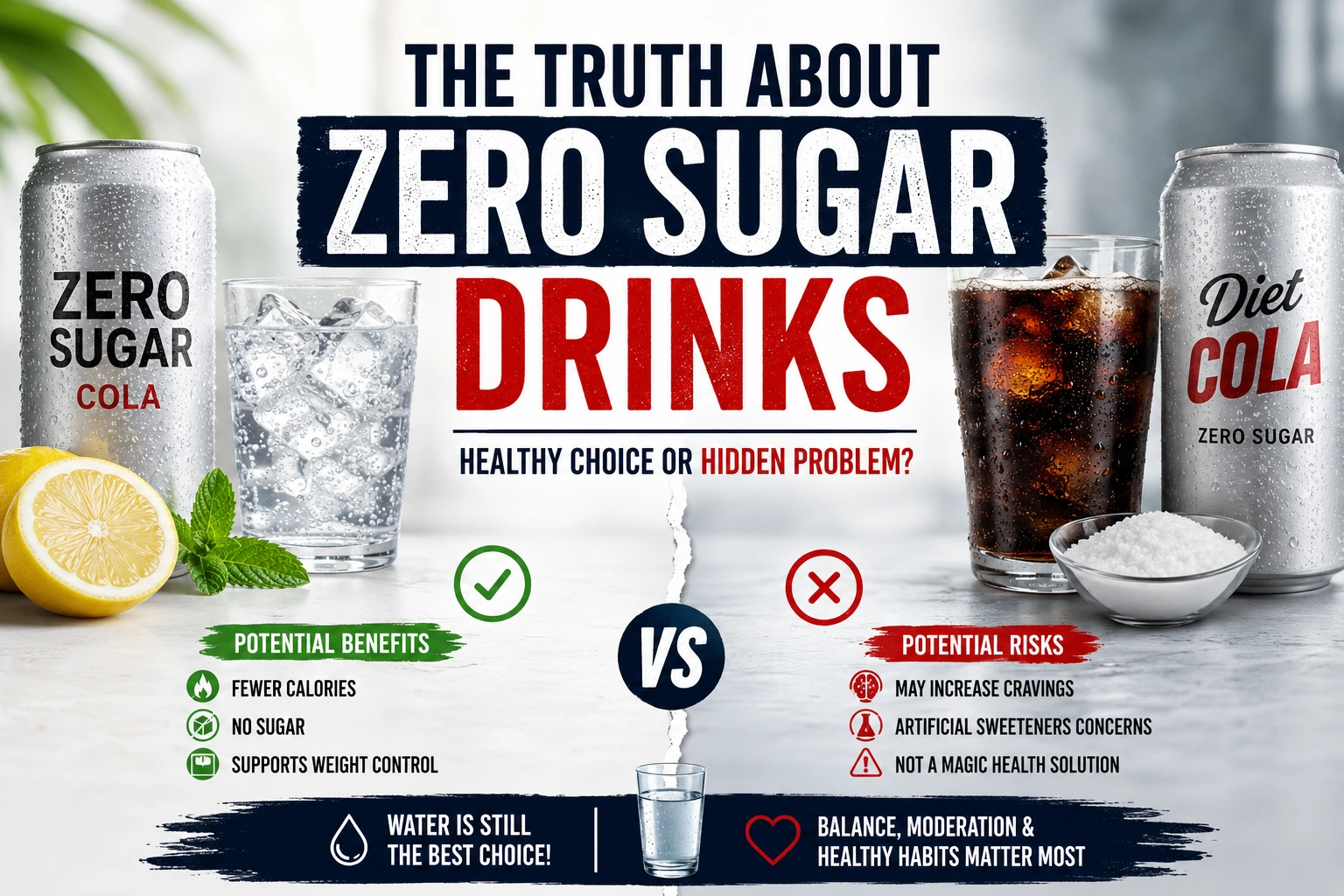
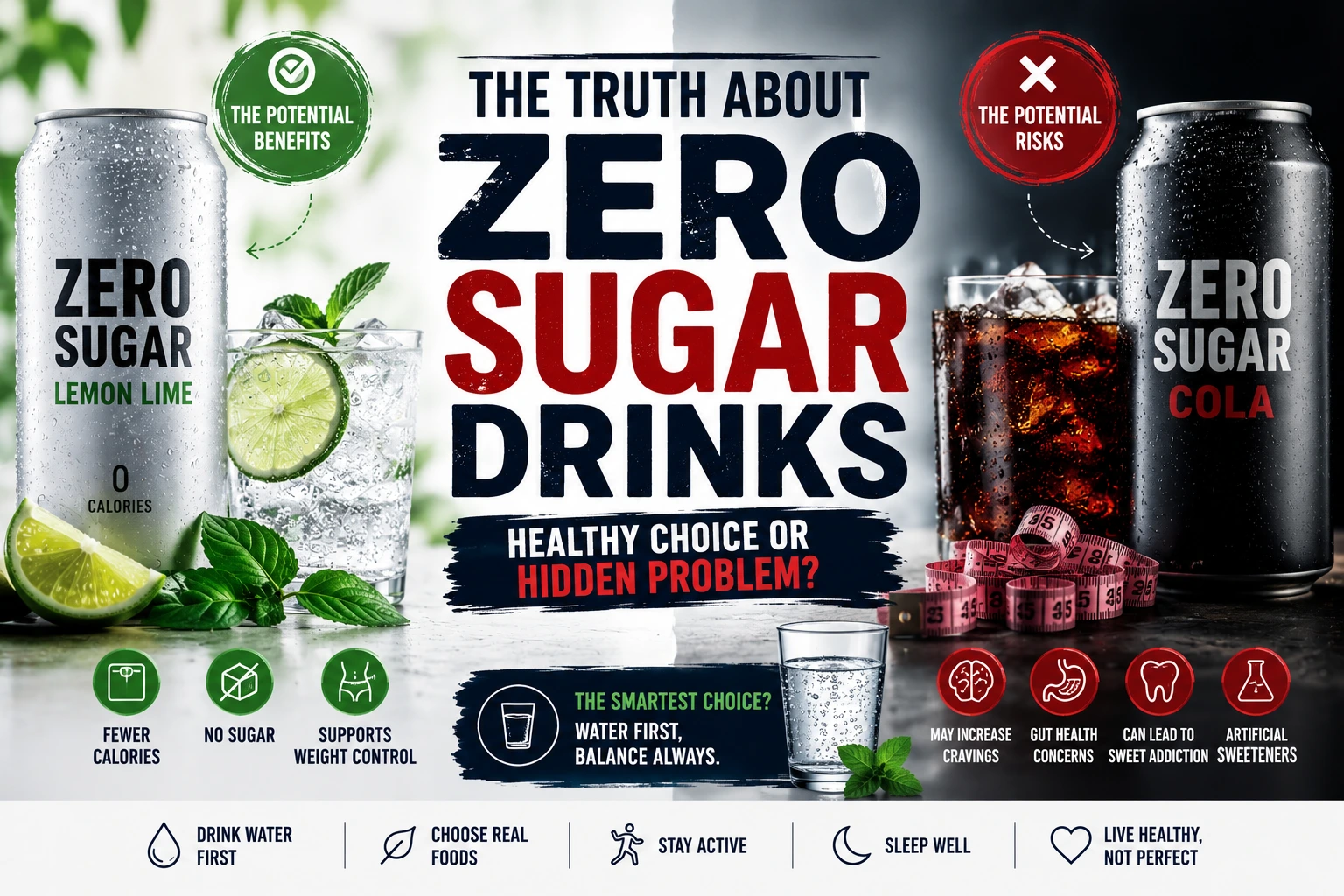
You see them everywhere now — supermarkets, gyms, restaurants, and even social media fitness pages. Zero sugar drinks are marketed as the “healthier” alternative to regular soda, promising the same sweet taste without the calories.
But are they actually good for your health? Or are they just another clever marketing trend?
The truth is more complicated than most people think.
What Are Zero Sugar Drinks?
Zero sugar drinks are beverages that contain artificial or low-calorie sweeteners instead of regular sugar. Popular sweeteners include:
- Aspartame
- Sucralose
- Stevia
- Saccharin
- Acesulfame K
These sweeteners make drinks taste sweet without adding many calories.
That’s why many people switch to zero sugar drinks when trying to lose weight or reduce sugar intake.
Common examples include:
- Diet sodas
- Sugar-free energy drinks
- Zero-calorie flavored water
- Fitness drinks labeled “zero sugar”
Why People Think They’re Healthy
The biggest reason people choose zero sugar drinks is simple:
They contain fewer calories.
A regular soft drink can contain over 30–40 grams of sugar in one serving. Drinking several sugary beverages every week can easily increase calorie intake and contribute to weight gain.
Zero sugar drinks seem like the perfect solution because they:
- Reduce sugar consumption
- Help control calories
- Taste similar to regular soda
- Feel more “diet-friendly”
For people trying to cut back on sugary drinks, this can definitely be helpful.
Can Zero Sugar Drinks Help With Weight Loss?
In some cases, yes.
If someone replaces multiple high-sugar drinks with zero sugar alternatives, they may reduce daily calorie intake significantly. Over time, this can support weight loss.
For example:
- Replacing regular soda with zero sugar soda may reduce hundreds of calories per day.
- Lower calorie intake can help create a calorie deficit.
- Some people find it easier to stick to a diet when they still enjoy sweet flavors.
But this does not automatically make zero sugar drinks “healthy.”
The Hidden Problems Nobody Talks About
1. They May Increase Cravings
Artificial sweeteners can keep your taste buds addicted to extremely sweet flavors.
This may lead to:
- More cravings for junk food
- Increased hunger
- Difficulty enjoying natural foods like fruits and vegetables
Some people notice they eat more snacks after consuming diet drinks.
2. They Can Create a False Sense of Progress
A lot of people think:
“I drank a zero sugar soda, so I can eat extra fries or dessert.”
This mindset can completely cancel out any calorie savings.
Weight loss still depends on overall habits — not just switching drinks.
3. They Don’t Automatically Improve Health
Even though zero sugar drinks contain less sugar, many are still:
- Highly processed
- Artificially flavored
- Low in nutritional value
Drinking fewer calories is good, but real health also depends on:
- Sleep
- Whole foods
- Exercise
- Stress management
- Hydration
A zero sugar drink cannot replace healthy lifestyle habits.
Are Artificial Sweeteners Dangerous?
This topic is heavily debated online.
Current research suggests that approved artificial sweeteners are generally safe in moderate amounts for most people. However, researchers are still studying their long-term effects on:
- Gut health
- Appetite regulation
- Metabolism
- Eating behavior
The biggest issue for most people is not immediate danger — it’s overconsumption and dependency on ultra-sweet foods.
What’s the Best Approach?
The healthiest approach is balance.
You do not need to completely fear zero sugar drinks, but you also should not treat them like unlimited health drinks.
A smart strategy:
- Use them occasionally
- Prioritize water most of the time
- Reduce dependence on sweet beverages overall
- Focus on long-term eating habits
If zero sugar drinks help you reduce excessive sugar intake, they can be useful. But relying on them heavily is probably not ideal either.
Better Alternatives to Try
If you want healthier drink options, consider:
- Water with lemon
- Sparkling water
- Unsweetened tea
- Black coffee
- Homemade fruit-infused water
- Coconut water (in moderation)
These options can help reduce sugar without constantly relying on artificial sweeteners.
Final Thoughts
Zero sugar drinks are not magic health products — but they are not automatically “bad” either.
For many people, they can be a helpful tool for reducing sugar and calories. The problem starts when they become a replacement for genuinely healthy habits.
Real health comes from consistency:
- Better nutrition
- Regular movement
- Quality sleep
- Balanced eating habits
Not just from choosing the “zero sugar” label.
Checkout Meal Prep Container - https://amzn.to/4txQc13
👉 Ready to Level Up? Check Out My Store - https://payhip.com/b/EroYO
💪 Get My Best Fitness Products Here - https://payhip.com/b/EroYO