INTRODUCTION
Social media is full of videos claiming that “cortisol belly” is the reason people can’t lose stomach fat. Influencers often describe it as lower belly bloating, puffiness, stubborn fat, and weight gain caused by stress hormones.
But is cortisol belly real, or just another viral wellness trend?
The truth is more complicated — and more scientific — than most viral posts make it seem.
What Is Cortisol?
Cortisol is a hormone produced by your adrenal glands. It plays a major role in:
- Stress response
- Blood sugar regulation
- Energy balance
- Sleep cycles
- Metabolism
- Inflammation control
Your body naturally releases cortisol throughout the day. Levels usually rise in the morning and decrease at night.
Cortisol itself is not “bad.” In fact, you need it to survive.
Problems can happen when stress becomes chronic and cortisol stays elevated for long periods.
What Is “Cortisol Belly”?
“Cortisol belly” is not an official medical diagnosis. It’s a social media term used to describe:
- Fat stored around the stomach
- Bloating
- Puffy face
- Increased waist size
- Weight gain linked to stress
Many people notice that during stressful periods — work pressure, poor sleep, anxiety, emotional burnout — they gain fat around the midsection.
There is actually some science behind this.
Can Stress Really Cause Belly Fat?
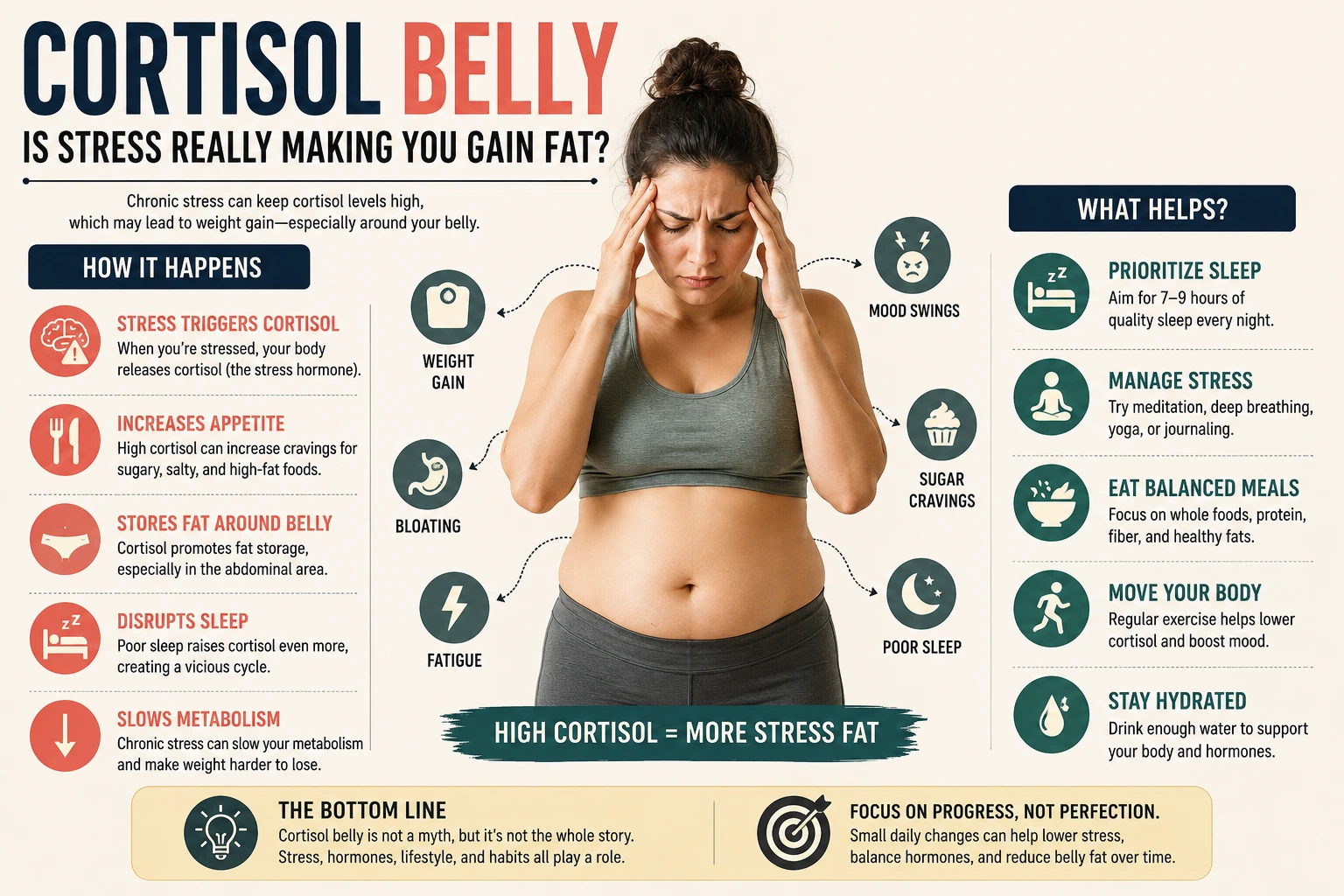
Yes — chronic stress may contribute to weight gain, especially around the abdomen.
Here’s how it works:
1. Stress Can Increase Appetite
When cortisol levels rise, your body may crave:
- Sugary foods
- Fast food
- High-calorie snacks
- Comfort foods
This is partly because stress signals your body to seek quick energy.
2. Poor Sleep Raises Cortisol
Lack of sleep can disrupt hormones linked to hunger and fat storage.
People who sleep poorly often experience:
- Increased cravings
- More hunger
- Lower energy
- Reduced workout performance
Sleep deprivation may also make belly fat harder to lose.
3. Stress May Reduce Physical Activity
When mentally exhausted, many people:
- Skip workouts
- Move less
- Sit longer
- Emotionally eat
Over time, this can contribute to gradual weight gain.
4. Cortisol May Influence Fat Distribution
Some research suggests chronically elevated cortisol may encourage fat storage around the abdominal area rather than other body parts.
That’s why stress-related weight gain often appears around the waist.
Signs Often Linked to High Stress Levels
While social media exaggerates many symptoms, chronic stress can sometimes lead to:
- Trouble sleeping
- Fatigue
- Irritability
- Sugar cravings
- Weight fluctuations
- Digestive issues
- Low motivation
- Increased belly fat
However, not every case of stomach fat is caused by cortisol.
Genetics, diet, activity levels, age, and overall health also matter.
Social Media Myths About Cortisol Belly
Myth 1: One Specific Belly Shape Means High Cortisol
There is no proven “cortisol belly shape” that automatically identifies hormonal imbalance.
Myth 2: Detox Drinks Can Cure Cortisol Belly
No tea, supplement, or detox drink magically removes stress fat.
Myth 3: Cortisol Is Always Bad
Cortisol is essential for survival. The issue is chronic stress, not cortisol itself.
Myth 4: You Can Spot-Reduce Belly Fat
You cannot target belly fat with one exercise or supplement alone.
Fat loss happens across the entire body.
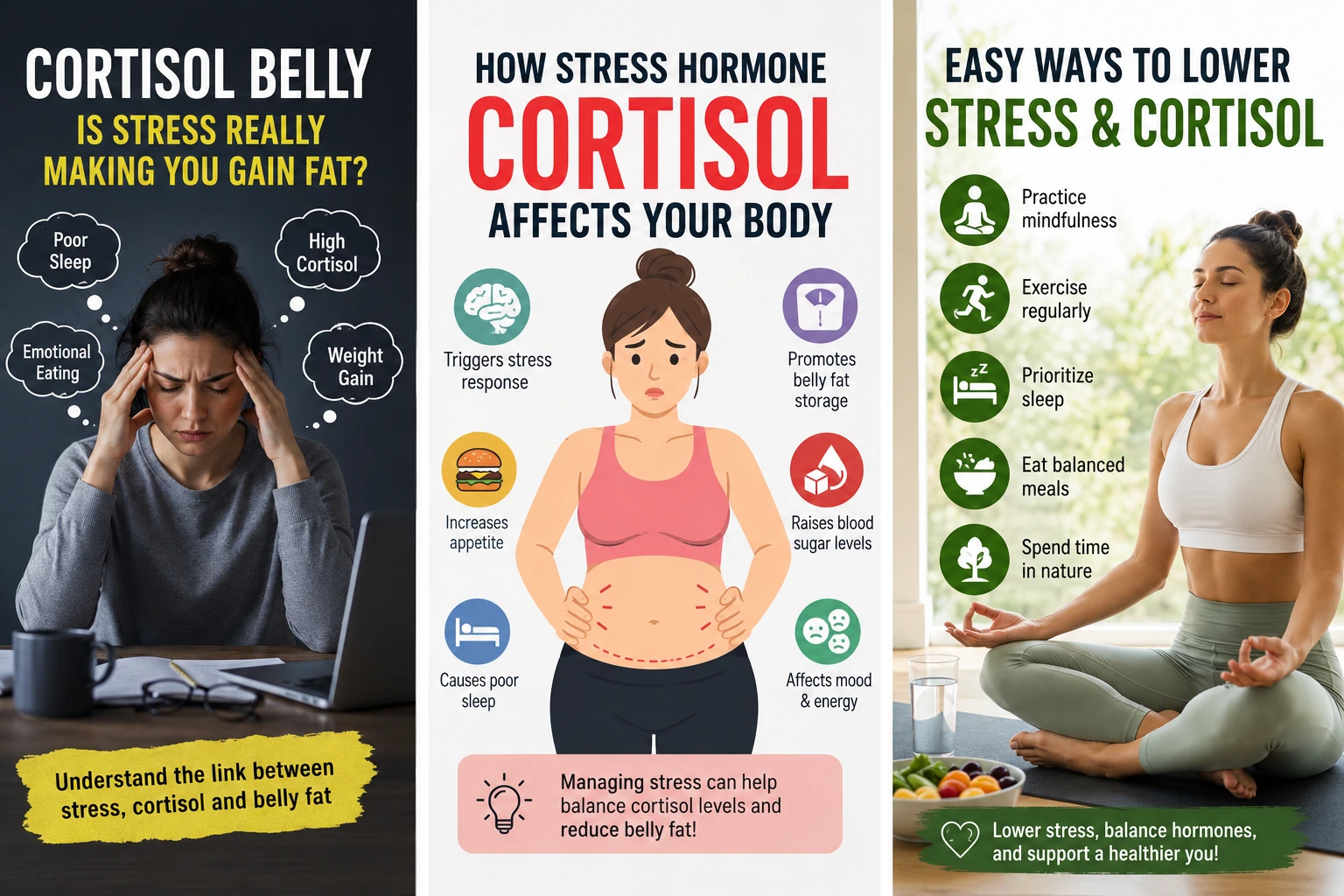
How to Reduce Stress-Related Weight Gain
Prioritize Sleep
Aim for consistent, quality sleep every night.
Manage Daily Stress
Helpful habits include:
- Walking
- Meditation
- Deep breathing
- Journaling
- Time away from screens
- Spending time outdoors
Eat Balanced Meals
Focus on:
- Protein
- Fiber
- Whole foods
- Hydration
Balanced meals can help control cravings and energy crashes.
Exercise Regularly
You do not need extreme workouts.
Even:
- Walking
- Strength training
- Cycling
- Yoga
can support stress management and overall health.
Final Verdict
The “cortisol belly” trend is partly real — but heavily oversimplified online.
Stress alone does not magically create belly fat overnight. However, chronic stress, poor sleep, emotional eating, and unhealthy habits can absolutely contribute to weight gain around the stomach.
Instead of chasing detoxes or viral hacks, focus on sustainable habits:
- Better sleep
- Consistent movement
- Balanced nutrition
- Stress management
That approach works far better than any social media shortcut.