INTRODUCTION
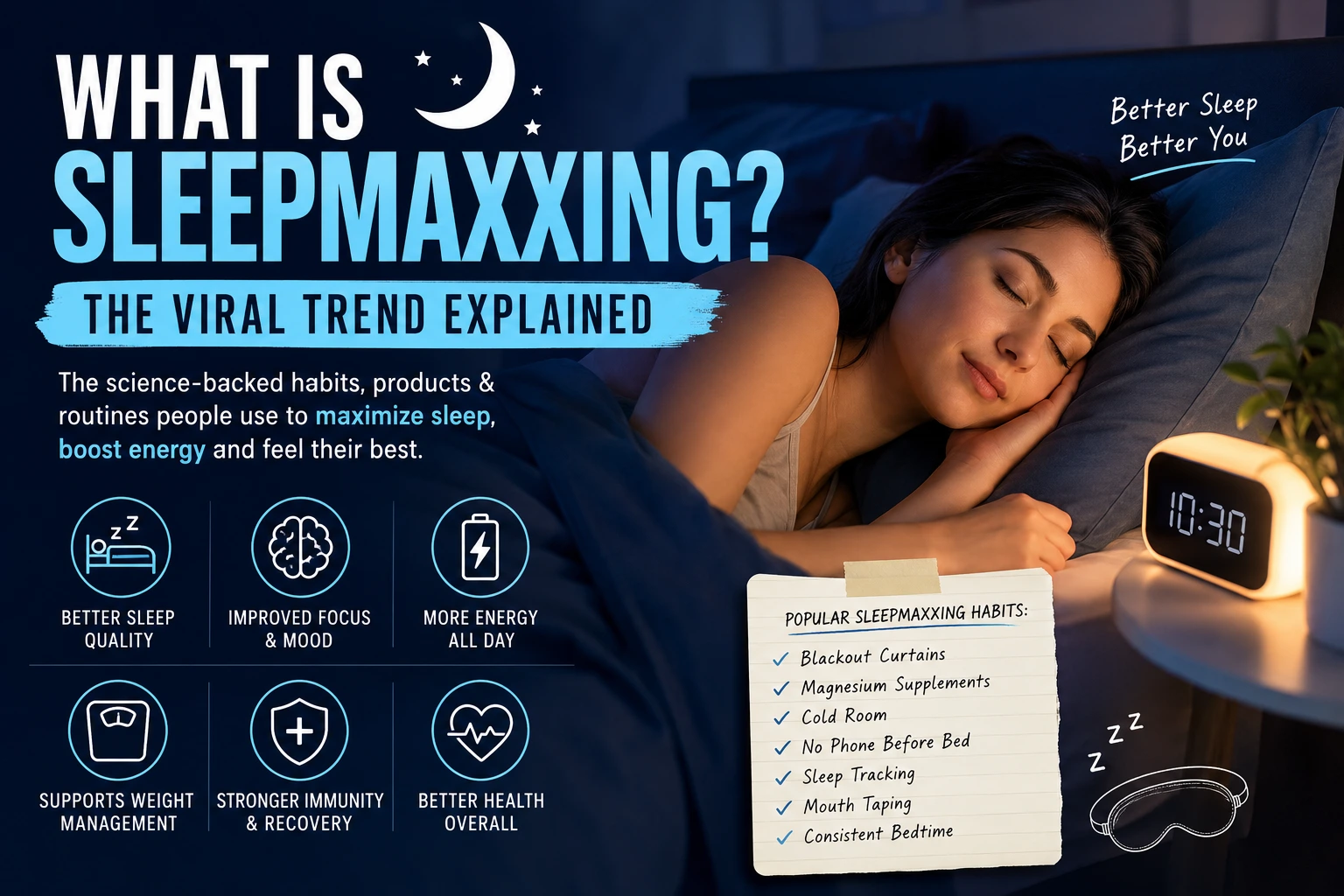
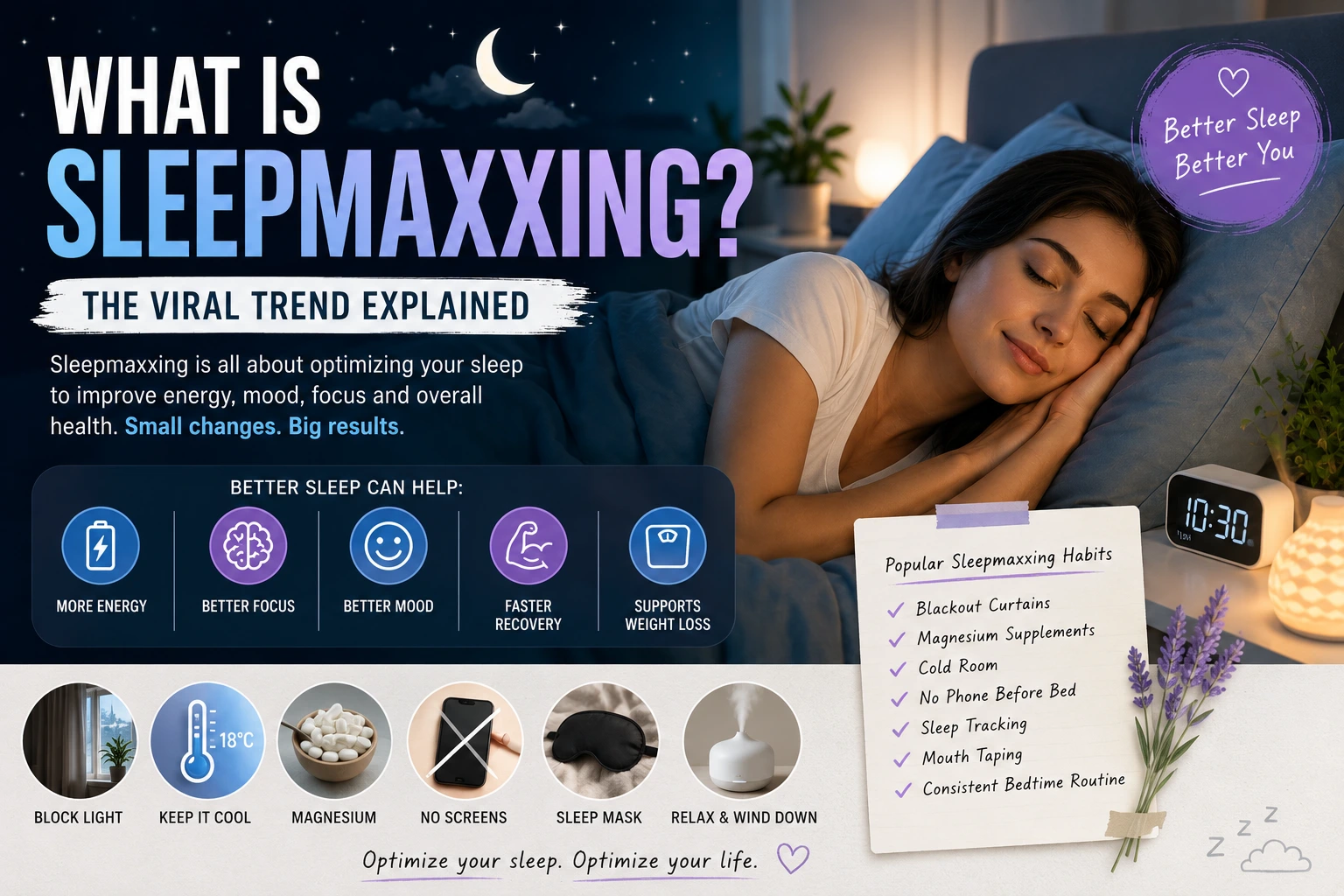
Sleep used to be ignored in fitness and productivity culture. Now it’s becoming the main focus. A new trend called “sleepmaxxing” is exploding across social media, with people trying everything possible to improve sleep quality, boost energy, recover faster, and even lose weight.
From blackout curtains to magnesium supplements and mouth taping, millions are treating sleep like the next big wellness upgrade.
But what exactly is sleepmaxxing, and does it actually work?
What Is Sleepmaxxing?
Sleepmaxxing is the practice of optimizing your sleep using habits, routines, products, and lifestyle changes designed to improve sleep quality and recovery.
The goal is simple:
- fall asleep faster
- sleep deeper
- wake up with more energy
- improve focus, mood, and recovery
Unlike old-school “sleep hygiene,” sleepmaxxing turns better sleep into a full wellness trend.
People online are now tracking:
- sleep scores
- REM sleep
- deep sleep cycles
- nighttime heart rate
- recovery metrics
Many treat sleep almost like a fitness challenge.
Why Is Sleepmaxxing Going Viral?
Several reasons are driving the trend:
1. Burnout Is Everywhere
People feel constantly tired from stress, screens, work, and social media overload. Sleepmaxxing promises a simple fix.
2. Fitness Culture Changed
Recovery is becoming just as important as workouts. Athletes and influencers now openly talk about sleep optimization.
3. TikTok & YouTube Trends
Social media creators share “night routines” featuring:
- red lights
- sleep masks
- magnesium drinks
- white noise machines
- cold bedrooms
These videos get millions of views.
4. Wearable Tech Made Sleep Trendy
Apps and devices now track sleep data daily, making people obsessed with improving their numbers.
Popular examples include:
- smartwatches
- sleep tracking rings
- fitness bands
Popular Sleepmaxxing Habits
Here are the most common sleepmaxxing methods people are trying:
Blackout Curtains
Blocking outside light may help deeper sleep.
Cold Room Temperatures
Many experts recommend cooler rooms for better rest.
Magnesium Supplements
Some people use magnesium before bed to help relaxation.
Blue-Light Blocking Glasses
These aim to reduce screen-related sleep disruption.
Mouth Taping
A controversial trend where people tape their mouths while sleeping to encourage nose breathing.
No Phone Before Bed
Reducing screen time before sleep may improve melatonin production.
Sleep Tracking Apps
People now monitor sleep like fitness stats.
Does Science Support Sleepmaxxing?
Some parts of sleepmaxxing are backed by science.
Better sleep is linked to:
- improved recovery
- better mood
- stronger focus
- hormone balance
- reduced cravings
- better workout performance
Poor sleep is also connected to:
- weight gain
- increased stress
- low energy
- worse concentration
However, not every viral sleep hack is proven.
For example:
- consistent sleep schedules are strongly supported
- reducing caffeine late at night helps many people
- mouth taping still lacks strong evidence for most healthy individuals
The basics usually matter more than expensive gadgets.
Can Sleepmaxxing Help With Weight Loss?
Possibly.
Poor sleep can increase hunger hormones and cravings, especially for sugary foods. Many people also snack more when tired.
Getting enough quality sleep may help:
- appetite control
- workout recovery
- energy levels
- consistency with healthy habits
Sleep alone will not magically burn fat, but it can support a healthier lifestyle.
The Dark Side of Sleepmaxxing
Some people are becoming overly obsessed with perfect sleep scores.
This can create anxiety around sleeping itself, sometimes called:
- “orthosomnia”
- sleep perfectionism
Constantly worrying about sleep may actually make sleep worse.
Not every trend online is necessary, and expensive products are not magic solutions.
Simple Sleepmaxxing Tips That Actually Make Sense
If you want better sleep without overcomplicating things, start with basics:
- keep a consistent bedtime
- avoid caffeine late at night
- reduce bright screens before sleep
- make your room cool and dark
- get daylight exposure during the morning
- avoid heavy meals right before bed
These habits are often more effective than viral hacks.
Final Thoughts
Sleepmaxxing reflects a growing shift in wellness culture. People are finally realizing that sleep affects nearly everything — energy, mood, fitness, recovery, and even weight management.
While some trends may be overhyped, improving sleep quality is genuinely important.
The key is focusing on sustainable habits instead of chasing every viral sleep trick online.
In the end, the best sleep routine is usually the one you can actually stick to consistently.